 Utah Classical Music of the Past
Gallery of new recordings of old music - for the curious or the studious
Utah Classical Music of the Past
Gallery of new recordings of old music - for the curious or the studious
This portion of the gallery showcases music originally composed as part of a co-operative performing arts work. Musical Theater, Opera, dance scores, film scores, and other forms as we continue to find them.
(We will be working out which selections to list here in coming weeks. Currently there are several good possibilities on the piano and ensemble pages. It is inevitable that this category/page will have some items cross-listed on 2 or more pages.)
Some of these, in fact many of these, are only available as reductions for solo piano, even though they were conceived as works for ensemble or orchestra. So to make sure they get found by music seekers, these titles may well be listed on multiple pages.
Just for starters, here are a few entries which are also cross-listed on other pages of this site. Some Broadway with ties to Utah, and a local composer of music for dance/theater recitals.
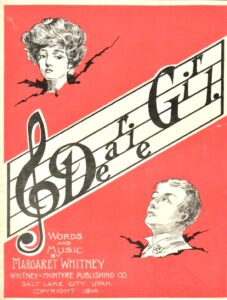
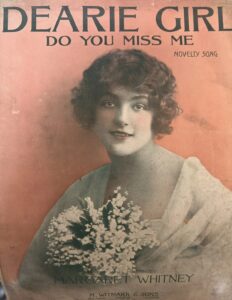
Dearie Girl (Do You Miss Me?) was just one of dozens of popular songs included in Salt Lake City composer Margaret Whitney’s many shows. At the time, some were referred to as Operas, others as operettas, and some as musical comedies. She must have been a young dynamo of creativity, as she composed and staged about one full-length show per year in her teens. This show had a basic musical comedy plot where a great girl was fond of a composer of ragtime music, but this particular song is more of a sentimental romantic ballad sung by a man who is afraid that the girl he loves is not waiting for him back home. This site often shares new recordings with synthesized instruments because historic recordings are unavailable, but for this one we are happy to link to an early 78-rpm record someone else posted. As one of the earliest local women composing commercially successful popular music we shall keep looking for more of her music to share here. (Click the title at the start of this item to hear it in a YouTube video.) The following photos include the covers of the first two editions of sheet music for this song, including the self-published 1914 original and the 1915 edition re-printed through a major national music publisher. And an AI update from a b/w photo from a 1914 local newspaper story about her.

Two selections that clearly belong on this page are by native Utahns who found success and even fame writing for Broadway Shows.
Tickle Toe by Otto Harbach Born and educated in Salt Lake City, Utah, but he moved to New York as a young adult and found favor as a collaborator on songs and even some full shows. As a sample, here is “Tickle Toe”, praising a supposedly new dance craze, from a 1917 show titled “Going Up.” Harbach was the lyricist, working with composer Louis A. Hirsh, who was a rising star in the years just before Gershwin. The plot was a girl-meets-boys style wherein a young lady was fond of a nice American lad, but her father wanted to match her with a famous, if arrogant, French aviator. This was in the WWI era when planes and pilots were hot topics. The lyrics show that Harbach remembered his Utah roots, starting off with, “When I travelled in the west, Where the Salt Sea lies at rest, There I saw a little Mormon Lassie, With a Norman chassis dance her best . . .” The co-authors were business savvy gents, both among the founders of A.S.C.A.P., (American Society of Composers, Authors and Publishers), so they published sheet music for this one in multiple versions – as a piano instrumental, and as a song, and as a small band/combo arrangement, all with elaborate instructions teaching the dance steps. This recording is an instrumental only version until this site manages to upgrade to be able to include high quality vocal selections. Click below to play it. And while listening, please remember to tickle some toes of your choice. Thank you for your attention to this matter.
Stop Waltz from 1920 by Harold Orlob, who was born in Logan. Utah’s music scene has always had a wide variety of styles, but one of it’s first Broadway Theater composing talents was Harold Orlob. He lived almost a century from the 1880s to the 1980s, and was productive as both a composer and producer. This “Stop Waltz” was from a 1920 Broadway show, and it was originally sung by the male romantic lead to the girl he was pursuing. The lyrics have him trying to impress her by sharing the newest dance craze, the “Stop Waltz”, in which the both the music and dancing stopped for a few seconds several times in the song. This recording presents it as an instrumental with the voice adapted to be played by violin. Orlob wrote a lot of these light staged musicals, but also in some more standard classical forms, including one symphony.
Butterfly Dance was one of many compositions by Mildred Tanner Pettit, this one written for a series of performances in 1916 and 1917. She and her collaborators created a series of productions for youth to dance to in local amateur recitals or talent shows. When each of their works was published they came with complete instructions for choreography, costuming and staging. In some later works, they even added full scripts to upgrade (?) from a dance recital to a mini-musical. See one of those later in this list. This one was suggested for youth at grade 3 to grade 5 age levels. (Audio only – click to play.)
Three Pieces for Children’s Dance by Mildred Tanner Pettit, 1927. This composer specialized in writing music for dance by young performers. (For the curious, YES, this composer WAS related to the famous Virginia Tanner who pioneered organized modern dance troupes for children in Utah, but they were in different parts of a polygamous family situation.) This mini-suite, only five minute long, includes three short piano solos. Published together in an LDS Church (Mormon) magazine called “The Children’s Friend” to encourage additional amateur performances, and including detailed tips on choreography, costuming and staging. The movements are festive, and require some serious piano skills. The movements include 1) At the Fair, 2) Rag Rug Dance, and 3) Dance of the Pop-corn Balls. The same composer also produced several even more ambitious and elaborate dance music scores which included theatrical elements. (Those may be posted later.) This entry is on video, so just click the title and hear it on YouTube.
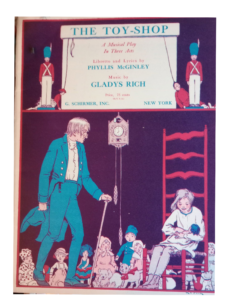

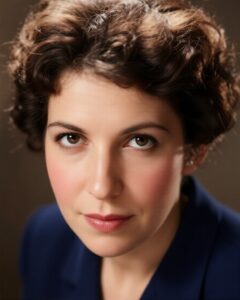
The Toy Shop was a 1928 Christmas musical by Gladys Rich as composer and Phyllis McGinley doing the lyrics and script. (In the photos Ms. Rich is in glasses.) Ms. Rich has additional works on other pages of this site, and McGinley went on to a very successful career as an author of magazine columns, a dozen collections of light poetry, and even a Pulitzer Prize! They seem to have met as sorority sisters at the U. of U., where they co-wrote musical skits for campus contests, and always won! They continued collaborating on a few published musicals plays for school-age performers. This one was the first, produced at a middle school in the Ogden area where Rich was teaching. It went so well that it was eventually published by a major music/theater company along with more of their works. It certainly has Christmas themes, as it is set in a Toy Shop preparing for the holiday rush, with mostly original music, but also a few quotes from standard carols. The entire piece is probably over 30 minutes long, but for now we are pleased to present the “Overture” for piano, as printed in the commercial score. Possibly more later… (Audio only – click below to play.)
… NEW! … Several pieces of media music by Jack Meakin, a son of Salt Lake City who went to Stanford and started his pre-med classes, but got side-tracked by a music career. He became a prolific composer of music for various forms of popular media, from radio to TV scoring to film music. He had long-running associations with Groucho Marx, Meredith Willson and others. He composed themes for long and short running shows on “old time radio”, episodic television series, and other commercial music. (And maybe even decades of music direction for the secretive Bohemian Club festivities? ) One feature film he scored is online – a quirky old sci-fi comedy by Arch Oboler called “The Twonky“ which has some nice orchestral touches. (You can see it for free by clicking that movie title. ) A second example of his output is the song/march “Thanks to the Yanks” which was the theme song for a 1945 network radio quiz show in which people answered trivia questions to win prizes, both for themselves and for someone serving in the Armed Forces. (This could be listed on the piano or vocal or media lists, but let’s put it here for now. Click below to play the audio.)
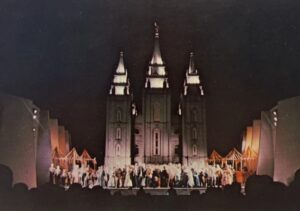
The Wind is a Lion from the musical Promised Valley, which was commissioned to play in 1947 to mark the centennial of the arrival of the Pioneers to the Salt Lake Valley. A special outdoor stage was built east of the SLC Temple, and the show was enjoyed by large crowds for a few seasons before being relocated to an indoor theater a few blocks away. Composer Crawford Gates had strong ties to the Beehive state, but most of his professional life was spent in various music posts in the Midwest. He conducted this revival recording in the 1980s because of the lingering affection many people had to the work. Linking you to what many think of as the “hit” song from the show, “The Wind is a Lion.”
Handcarts West! (a.k.a. Handcart Trails!) – Instrumental selections from a 1958 musical theatre production written to be performed by teens. This sheet music was included in the printed script that performers worked from. ( I know, I know … FROM WHICH performers worked…) The “Book” (story/script) was by Ruth Hale, a major figure in Utah/LDS/Mormon community theatre circles, and a co-founder of the popular Hale Center Theater. Music was composed and/or arranged by Samuel O. Pratt, who was probably related to the family central to the Lyon & Healy Harp Company. My personal opinion is that some of the piano music here requires abilities beyond that of an average teen performer, which may have limited the reach of this production. Hear a few excerpts at my YouTube page, where you may also stumble onto other videos on similar topics.
Deseret – A full scale grand opera shown live on national TV on NBC in 1961 when the major television networks occasionally tackled serious arts event programming. Composed by the multi-talented Leonard Kastle, who also directed an acclaimed noir detective movie. This work has a plot revolving around the drama and turmoil of a reluctant young plural bride candidate for Brigham Young. Not especially anti-Mormon or pro-Mormon so much as an artistic look at a dramatic/historic situation explored on stage. This is not a project of mine, but I’m linking it here as an item of note on the topic of classical music in Utah history. The video for this production was not preserved, which was sadly routine for TV networks of that time period, and the entire production was thought to be lost until a few years ago when a nearly complete copy of the audio was found in the personal archives of one of the performers. A few copies of the conductor’s score were printed and might be found in regional libraries. (And one on my own bookshelf!) Hear almost 2-hours of audio from the opera – nearly complete but missing a few scenes – at https://www.youtube.com/watch?v=V3o-jEcpqnI If “Opera on Mormon Themes” is of interest to you, a long article on the subject from the Deseret News in 2009 mentions over 50 such works, with or without Utah composers. Read it at: https://www.deseret.com/2009/1/17/20377941/mormons-opera-and-mormon-operas/
Pan’s Dance from the film score for “The Seven Faces of Dr. Lao” — or this alternate link. (Sorry, but the links for this one keep changing, so I’ve added extras that were active at the time of posting. Do a Google search if these don’t get you there.) Here is an interesting musical side trip. Music by Leigh Harline, from his soundtrack to a 1964 film. This short scene from a film score is a nice little classical-inspired piece in Tarantella style featuring flute and chamber orchestra. (In clips with video from the film the music may not start until later in the scene.) The composer, Leigh Harline, got early training in Utah, assisting with Gustave Schuster’s music studio and later at the University of Utah. He played several instruments, and even fronted a jazz band. His talent was obvious, and he found quick professional success in Hollywood, including composing famous music for major Disney films among other scores, and even winning Academy Awards for some of his songs. This selection is from his score for an eccentric western/fantasy film about a magical travelling circus in the American Southwest, in which Tony Randall played multiple roles. I played no role in making this clip – just linking it here from various sources as a quirky addition to the list.
The Old Mill was one of the most highly rated of the many “Silly Symphonies” from Disney Studios, helped by an excellent score by Harline. These were short animated films with excellent music, ranging from symphonic to folksy depending on the storyline. The series had various composers over the years, but Carl Stalling and Leigh Harline scored many of the best. Warning that the links to view these may not work forever, as Disney is understandably hawkish on controlling their I.P. (Intellectual Properties), so do your own web search if the link shared here is not resolving. (We did not POST this video, but are only sharing a link to it that someone else posted as an educational aid.)